Greece Island Hopping: Santorini, Mykonos & the Hidden Cyclades
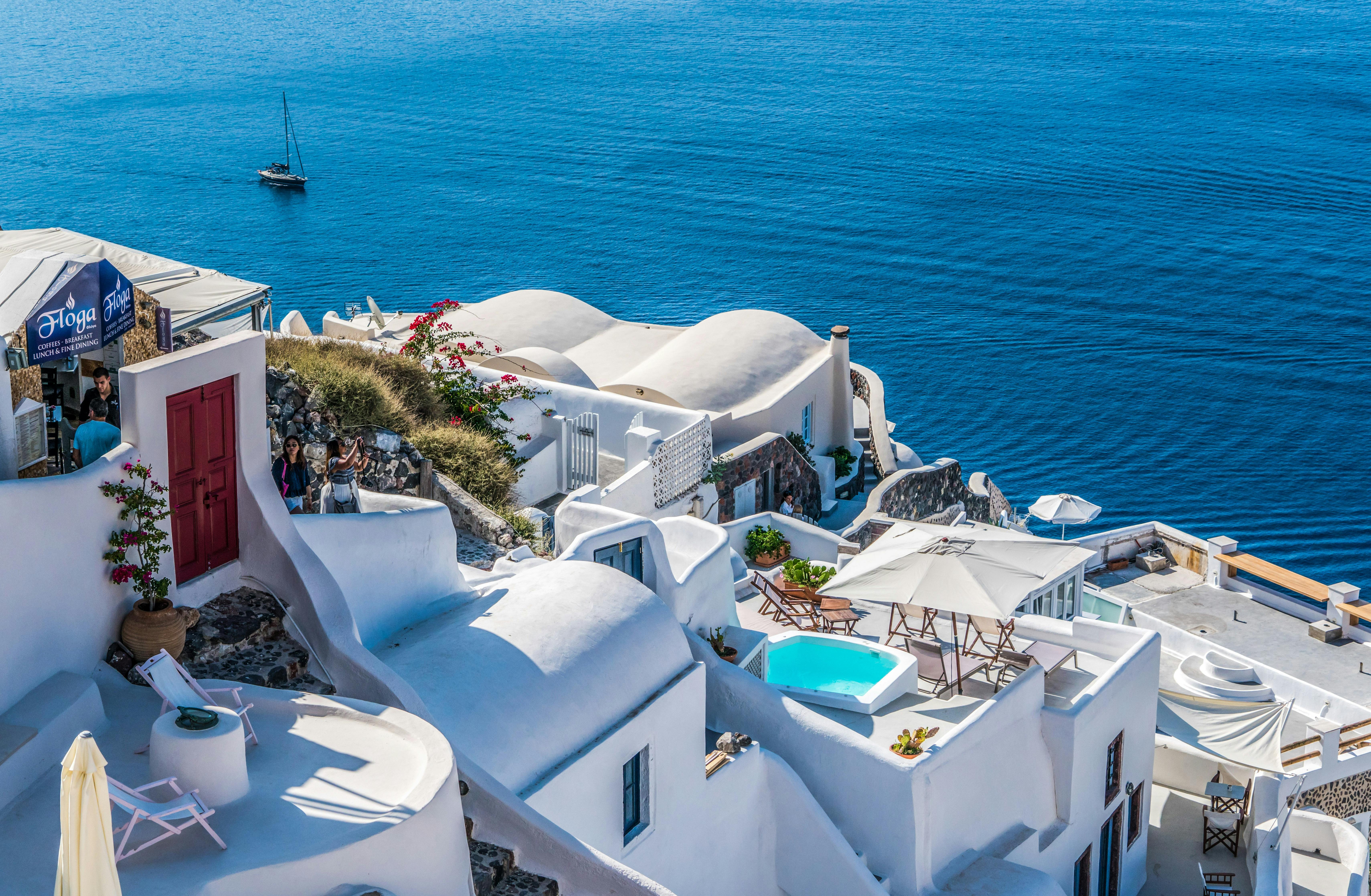
Greece's island-hopping circuit is one of the most rewarding multi-destination itineraries in the world — but the way most travellers do it, rushing between Santorini and Mykonos in high summer, is also one of the most overpriced and overcrowded travel experiences in Europe. This guide covers how to structure a trip that includes the famous islands without being defined by them, when to go, how ferries actually work, and which lesser-known Cycladic islands are worth your time.
When to Go — and Why July–August Is Often Wrong
The Greek islands are busiest and most expensive from late June through August. Santorini's Oia village at sunset in July is an extraordinary mass of humanity — beautiful in photographs, claustrophobic in person. Hotel prices on the premium caldera hotels peak at EUR 400–1,200/night during this window.
May, June, and September are when most experienced Greece travellers go. Weather is warm (24–30°C), the Aegean is swimmable, crowds are 40–60% lower, and prices drop accordingly. The light in May and September is softer and more photogenic than the harsh midday glare of August. September's sea temperature is the warmest of the year — the Aegean stores heat through the summer and releases it in early autumn.
April and October are shoulder shoulder months: cooler (18–22°C), occasionally rainy, but viable for travellers who prioritise museums, villages, and food over beach time. Ferry frequencies reduce in October; some smaller-island routes shut down after mid-October.
How the Ferry System Works
All major Cycladic islands are connected by high-speed and conventional ferries departing from Piraeus (Athens' port, 40 minutes from the city centre by Metro). Book ferry tickets at least 3–4 weeks ahead in summer for specific cabin classes or vehicle transport; foot passengers can usually find tickets closer to departure but popular routes (Piraeus–Santorini, Mykonos–Santorini) sell out.
High-speed catamarans (SeaJets, Hellenic Seaways) cover Piraeus to Mykonos in 3.5 hours, Piraeus to Santorini in 5 hours. Conventional ferries (Blue Star) take 5 and 8 hours respectively but cost 30–40% less and have cabins for overnight crossings. For an island-hopping route, overnight ferries between islands save both a night's accommodation and a day's travel time.
Inter-island connections in the Cyclades are shorter: Mykonos to Paros is 45 minutes by fast ferry; Paros to Santorini is 1.5 hours. The central Cyclades (Paros, Naxos, Ios) are the hub; most routes pass through them.
Santorini: Beyond the Sunset Queue
Oia's sunset is real and genuinely beautiful — but so is the sunset from Imerovigli (a 30-minute walk north of Fira) with half the people and none of the elbow-room crisis. The caldera view from Fira's main path is free; the cable car down to the old port (Fira Skala) costs EUR 6 and offers the best caldera perspective of all.
The island's volcanic beaches — Red Beach (Kokkini Paralia) near Akrotiri, Perissa and Perivolos on the south coast — are black and dark red volcanic sand rather than white. They're striking and less crowded than Oia. The ancient Minoan settlement at Akrotiri, buried by a volcanic eruption around 1600 BC and excavated intact, is one of the most extraordinary archaeological sites in Europe and is almost always uncrowded.
For accommodation value, stay in Fira or Firostefani rather than Oia. The caldera views are the same; the prices are 30–50% lower.
Mykonos: Where to Find the Real Island
Mykonos is legitimately one of the most expensive islands in the Mediterranean in high season. What most package-tour visitors miss is that the interior — the farming villages, the windmill quarter seen from below rather than above, the quieter beaches on the north coast — is almost completely untouched by the beach-club economy.
Agios Sostis beach on the north coast is accessible only by road (no sun loungers, no bar, no infrastructure) and is consistently the best beach on the island. Ano Mera village in the island's centre is where residents shop and eat; the monastery of Panagia Tourliani in the village square dates to 1542 and is open to visitors.
The Hidden Cyclades Worth Adding
Paros is where people who have been to Mykonos go when they want to relax. Naoussa is a fishing village with excellent seafood tavernas and a fraction of the nightlife noise. The island has beautiful beaches (Kolymbithres, with its unusual granite rock formations), good windsurfing, and honest restaurants. It's also the ferry hub of the Cyclades, making it a natural base for further exploration.
Naxos is the largest Cycladic island and the most self-sufficient — it has its own agriculture, cheese production, and potatoes famous across Greece. The beaches on the west coast (Agios Prokopios, Agia Anna, Plaka) are white sand and calm water. The interior has medieval Venetian tower-houses, mountain villages, and hiking trails connecting them. The statue of the unfinished kouros (giant ancient marble figure) at Apollon in the north is one of the most evocative archaeological sites in the Cyclades.
Folegandros is a small, dry island with no airport, no package-tour infrastructure, and one of the most dramatically situated village centres (Chora) in Greece — perched on a cliff 300 metres above the sea. Ferry connections are fewer than the central Cyclades; that's the point. A three-night stop here resets the pace entirely.
Milos has the most varied geology in the Cyclades — coloured rock formations, sea caves (Kleftiko, accessible by boat), and beaches ranging from white to ochre to grey. It's becoming more popular but has not yet reached Santorini or Mykonos crowd levels. The catacombs near Tripiti are early Christian burial chambers dating to the 1st century CE and are rarely visited.
Sample 10-Day Itinerary
Days 1–2: Athens — Acropolis, Plaka, National Archaeological Museum. Overnight ferry from Piraeus.
Days 3–4: Paros — base camp for the central Cyclades. Naoussa, Kolymbithres beach, day trip to Naxos by ferry.
Days 5–6: Santorini — Oia at dawn (not sunset), Akrotiri site, Red Beach, caldera walk from Fira to Imerovigli.
Days 7–8: Folegandros — Chora village, cliff walks, no agenda.
Days 9–10: Mykonos — Agios Sostis, Little Venice, overnight ferry back to Piraeus and flight home.
Practical Notes for Indian Travellers
Greece is part of the Schengen Area. Indian passport holders require a Schengen visa (Type C), applied through the Greek consulate or VFS Global. Processing takes 10–15 working days; apply 4–6 weeks before travel. A booked itinerary with ferry tickets and accommodation confirmations strengthens the application significantly. Travel insurance covering EUR 30,000 minimum medical is mandatory for the visa.
Direct flights from India to Athens operate via Emirates, Lufthansa, and Turkish Airlines with one stop; budget 8–12 hours travel time from major Indian cities. Flying into Athens and out of a different island (or vice versa) via a European hub is often the most efficient routing for island-hopping trips.
Plan Your Greece Trip with EternalMiles
We handle Schengen visa documentation, inter-island ferry bookings, and accommodation across the Cyclades — including those caldera hotels that require advance notice and specific room-block negotiations. Talk to our team or browse our Greece holiday packages.